
1. Inngangur
This manual provides comprehensive instructions for the safe and effective use of your Hantek DSO5072P Digital Storage Oscilloscope. It covers essential topics from initial setup and basic operation to advanced features, maintenance, and troubleshooting. Please read this manual thoroughly before operating the device to ensure optimal performance and safety.
2. Öryggisupplýsingar
Always observe the following safety precautions to prevent injury and avoid damage to the instrument or other connected devices.
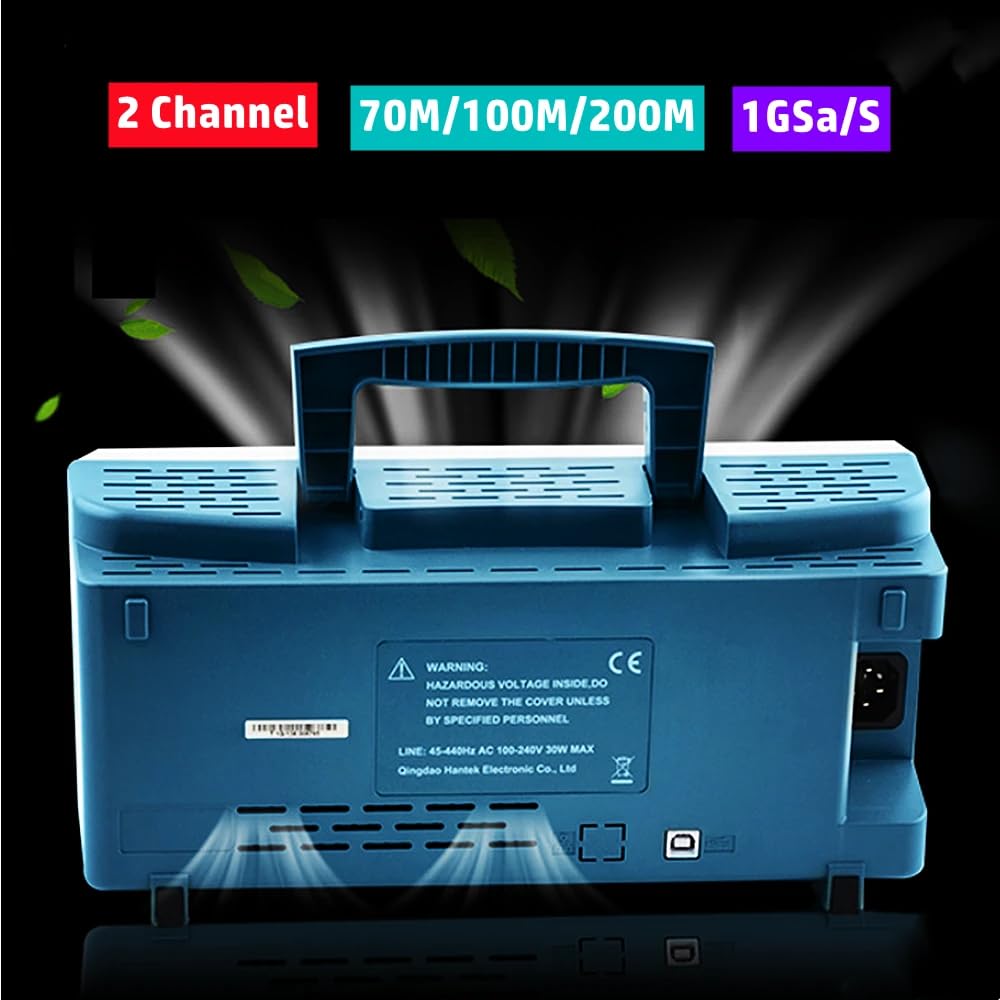
- Hættulegt binditage: The device contains hazardous voltage inside. Do not remove the cover unless by specified personnel.
- Aflgjafi: Ensure the oscilloscope is connected to a power source within the specified voltage range (AC 100-240V, 45-440Hz, 30W MAX).
- Jarðtenging: Always ensure the oscilloscope is properly grounded to prevent electric shock.
- Umhverfi: Operate the device in a dry, well-ventilated area, away from direct sunlight, high temperatures, and excessive dust.
- Rannsóknir: Notið aðeins nema sem eru metnir fyrir rúmmáliðtage and current levels you intend to measure. Ensure probes are properly calibrated before use.
- Viðhald: Látið alla þjónustu til hæfs þjónustufólks.
3. Innihald pakka
Gakktu úr skugga um að allir hlutir sem taldir eru upp hér að neðan séu með í pakkanum þínum. Ef einhverjir hlutir vantar eða eru skemmdir skaltu hafa samband við söluaðila þinn.
- Hantek DSO5072P Digital Storage Oscilloscope Unit
- Rafmagnssnúra
- USB snúru (gerð A til tegund B)
- Two (2) Oscilloscope Probes (with accessories)
- Notendahandbók
- Hugbúnaður geisladiskur

The following video demonstrates the unboxing and initial overview of a similar Hantek oscilloscope model (MSO5102D), which shares many common features with the DSO5072P series.
4. Vöru lokiðview
Familiarize yourself with the main components and interfaces of your oscilloscope.
4.1 Framhlið
The front panel features the main display, function buttons, and control knobs for vertical, horizontal, and trigger settings. A USB host port is available for connecting USB storage devices, and a multi-pin connector is present for specific accessories or expansion.

4.2 Bakhlið
The rear panel includes the power input connector and a USB device port for PC connectivity, allowing for remote control and data sharing.
5. Uppsetning
Follow these steps for initial setup of your oscilloscope.
5.1 Rafmagnstenging
- Connect the provided power cable to the power input on the rear panel of the oscilloscope.
- Stingdu hinum enda rafmagnssnúrunnar í jarðtengda riðstraumsinnstungu.
5.2 Kannatenging
- Connect the BNC connector of an oscilloscope probe to one of the Channel 1 (CH1) or Channel 2 (CH2) inputs on the front panel.
- Ensure the probe's ground clip is securely attached to the ground terminal of the circuit under test.
5.3 Kveikt á
Press the power button located on the front panel to turn on the oscilloscope. The device will undergo a boot sequence, and the display will show the Hantek logo before presenting the waveform interface.
6. Grunnaðgerð
This section covers fundamental operations for capturing and analyzing waveforms.
6.1 Using the Test Signal
The oscilloscope provides a 1kHz square wave test signal, useful for calibrating probes and verifying basic functionality. Connect a probe to the dedicated test signal output on the front panel.
6.2 Adjusting Vertical and Horizontal Scales
- Vertical (Volts/Div): Notaðu VOLTS/DIV knob for the selected channel to adjust the vertical scale, changing the voltage represented by each vertical division on the screen.
- Horizontal (Time/Div): Notaðu TIME/DIV knob to adjust the horizontal scale, changing the time represented by each horizontal division.
- Staða: Notaðu STÖÐU knobs for vertical and horizontal adjustments to move the waveform on the screen.
6.3 AutoSet Function
The SJÁLFSTÆÐI button automatically adjusts the vertical, horizontal, and trigger settings to display a stable waveform. This is a quick way to get a view of your signal.

7. Tæknilýsing
Key technical specifications for the Hantek DSO5072P series oscilloscopes:
| Eiginleiki | DSO5202P | DSO5102P | DSO5072P |
|---|---|---|---|
| Bandbreidd | 200MHz | 100MHz | 70MHz |
| Rásir | 2 | ||
| Rauntími Sample Verð | 1GSa/s | ||
| Equivalent Sample Verð | 25GS/s | ||
| Upptökulengd | 40 þúsund | ||
| Rise Time (BNC typical) | 1.8ns | 3.5ns | 5ns |
| Lóðrétt upplausn | 8-bit resolution, all channel sampled simultaneously | ||
| Inntaksviðnám | 1MΩ±2% || 20pF±3pF | ||
| Max Input Voltage | CAT II: 300VRMS (10×), Installation Category; CAT III: 150VRMS (1×) | ||
| Vörumál | 8.66 x 5.91 x 4.72 tommur | ||
| Þyngd hlutar | 1.1 pund | ||

8. Viðhald
Rétt viðhald tryggir endingu og nákvæmni sveiflusjásins.
- Þrif: Notaðu mjúkan, damp cloth to clean the exterior of the oscilloscope. Avoid abrasive cleaners or solvents that could damage the casing eða skjár.
- Geymsla: Store the device in a cool, dry environment, away from direct sunlight and extreme temperatures.
- Rannsakendur: Handle probes carefully. Avoid bending or stressing the cables. Store them properly to prevent damage to the tips and connectors.
- Loftræsting: Ensure the ventilation openings on the device are not blocked to prevent overheating.
9. Bilanagreining
If you encounter issues with your oscilloscope, try the following common troubleshooting steps:
- Enginn kraftur: Check the power cable connection to both the oscilloscope and the power outlet. Ensure the power button is pressed.
- Enginn skjár: If the power indicator is on but the screen is blank, try restarting the device. If the issue persists, contact support.
- Ekkert merki á skjánum: Verify that probes are correctly connected to both the oscilloscope input and the circuit under test. Check probe settings (e.g., 1X/10X attenuation). Use the AutoSet function.
- Óstöðug bylgjuform: Adjust the trigger level and mode. Ensure the horizontal time base is appropriate for the signal frequency.
- Rangar mælingar: Calibrate your probes using the built-in test signal. Verify the probe attenuation setting on the oscilloscope matches the physical probe setting.
10. Ábyrgð og stuðningur
Hantek products are designed for reliability and performance. For warranty information, technical support, or service inquiries, please refer to the official Hantek webeða hafið samband við dreifingaraðila á staðnum. Geymið kaupkvittunina sem sönnun fyrir kaupum vegna ábyrgðarkröfu.